Showing posts with label Teaching Reading. Show all posts

Wednesday, September 4, 2013

"Teaching Your Child to Read" Guest Blogger Series: Misty

   I am so excited to be getting things back up & rolling on the blog today.  I have loved this series. I have been trying things out & adding things in that I read on the blog & they are working. Really working. Progress is still slow, but we are making progress. It makes me so happy!!! Today we have Misty with us. She blogs over at Mimi's House.


Learning to Read!
Hi! I’m Misty and I blog about our homeschooling journey at Mimi’s House. I was excited about the opportunity to do this guest post for Tiffany!

Learning to read is a huge deal in our home! It was actually one of the stipulations in my husband allowing me to homeschool our kids.  I taught my oldest child to read at 5 years old. She was in preschool at the time and I was teaching her each morning for a few minutes before she went to school. It was a lot easier than I thought it would be, and we ended up pulling her out of school over Christmas break. I had done what my husband deemed impossible! My middle child began reading at 4 and by her Kindergarten year she was reading chapter books.
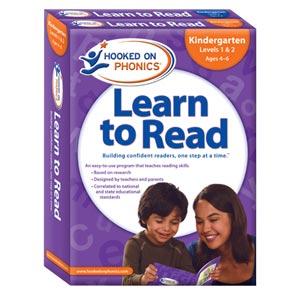
When I made the decision to teach my oldest to read I knew right away what program I would use, Hooked on Phonics! I had been a fan of the program since Junior High School. It was what the reading lab at our school used to teach the struggling readers. I worked in the lab during study hall each week and was amazed at how easy it was to use.

Hooked on Phonics uses the phonics approach to learning to read, for example lesson 1 is –at words. So, the child will learn to read the words cat, hat, sat, mat. Every few lessons the child is also introduced to sight words.

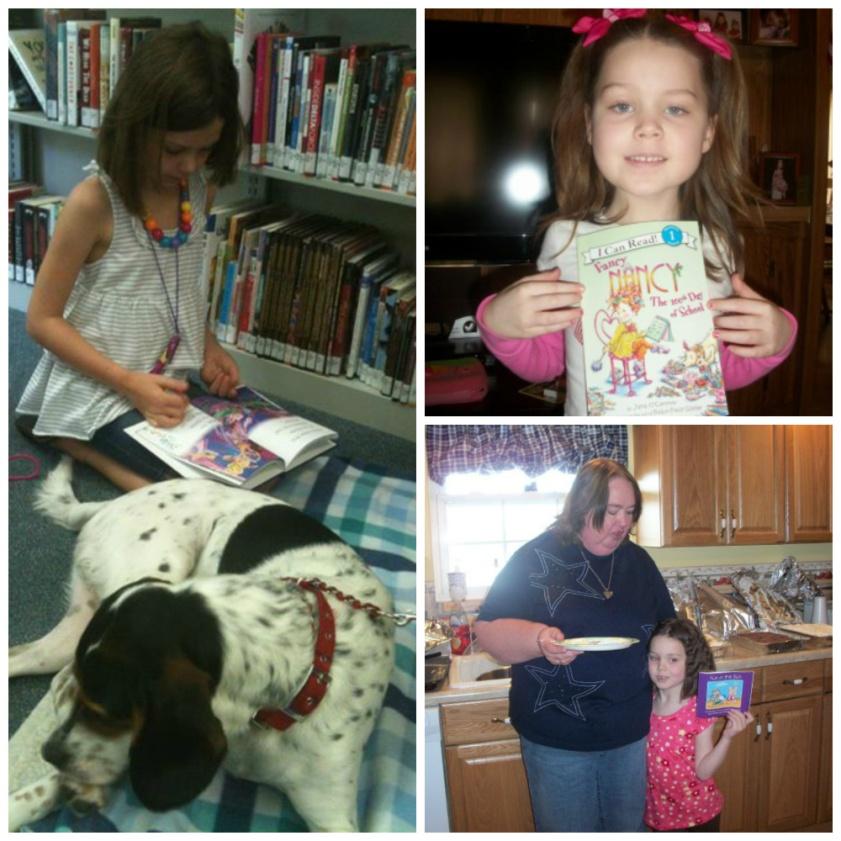
It is a simple program, and each week has a story to for the child to read. After a few lessons the child receives a book! This was a huge hit in our home because they could take the book and show their friends, their dad, or their grandparents that they could read a “real” book! We have used the Kindergarten and 1st grade sets.
While I do love Hooked on Phonics for teaching reading, I also believe there are many other things to do to encourage your children to read! Here are a few that we have done in our home:

  1. We take our kids to the library on a regular basis! Our kids know getting a library card is a big deal and they get one as soon as they start Hooked on Phonics. We also take them to Tail Wagging Tutors for extra reading practice and rewards. This is a therapy dog program that encourages kids to read. They give certificates, pencils, stickers, and other rewards when a child reads a book to the therapy dog.
  2. We use book adventure for rewards and to gauge reading comprehension. This is a program similar to accelerated reader in public schools. We make our own rewards and the girls really like being able to redeem their points.
  3. Book it! This is a great program that Pizza Hut offers. After a child reads 10 books in a month they get a free pizza. We don’t do this anymore due to my daughter’s food allergy, but it is a great program!
  4. Certificates and days without chores are incentives the girls got when they finished a level of Hooked on Phonics. Each grade has 2 levels, so they got this 4 times while they were learning to read. They thought it was awesome to get a whole day without chores!


    These are just a few ideas to keep in mind when you begin teaching your child to read. The best piece of advice I have to moms just starting out is to relax! Make learning to read a fun thing!
    There was a few times with my oldest that we would have to slow down and review a lesson or two. I would get so frustrated which just discouraged her. I realized though that once I relaxed and didn’t push her, it came SO much easier. She is now an avid reader and has always read way beyond her grade level.
    Another piece of advice is to not discourage your child when they show an interest in learning. When my youngest daughter wanted to start learning to read at 4 I discouraged her by telling her she wasn’t ready. After arguing with her for a few months I let her start. She picked it up like it was the easiest thing in the world! She had finished level K by the end of preschool, and level 1 a month after starting her K year.
    Moms never let anyone tell you that you cannot teach your child to read, believe in yourself, and in your child! Teaching my children to read is one of the best experiences I have ever had. There is something magical about seeing their eyes light up when they realize they CAN read! It is priceless, and one of the most rewarding things I have ever done!

Thursday, July 11, 2013

"Teaching Your Child To Read" Guest Blogger - Katrina & Korinda (Part 2)

So it is way past due, for another guest blogger on our amazing series of  Teaching Your Child to Read. Guest Post Series. Today we are lucky to have Katrina back. If you missed Part 1 of Katrina Guest post you can check it out HERE. Katrina blogs over at www.thechickenwire.blogspot.com  .


Using the book Teach Your Child To Read In 100 Easy Lessons - Part Two


In part one of this article I described how I have used the book Teach Your Child To Read In 100 Easy Lessons.   In this second part, my friend Korinda tells of her experience teaching her children with the same book. She does a great job of sharing it, so I'll let her take it from here!

My name is Korinda Luhmann, and I have had the privilege of teaching children in a public school and home setting.  Before we had kids, I was a public school teacher in the northern suburbs of Chicago with a master’s degree in education from the University of Illinois.  Because I taught first and second grades, I was actively involved in teaching children how to read and loved to see the light bulbs turning on in students’ heads as the world of reading began to click for them.  Now for the past eleven years, I have been a homeschooling mama to our seven kids (five boys sandwiched between two girls).

When our oldest daughter was three years old, I stumbled upon the book Teach Your Child to Read in 100 Easy Lessons by Siegfried Engelmann.  I read through the teacher’s instructions in the beginning of the book and started the program.  By the time we completed Lesson 50, reading began to click for her, about a month before her fourth birthday.  My husband and I can remember pulling up to a strip mall in our town and hearing the names of the stores being read aloud from the backseat.  We looked at each other and said, “I guess she is reading!”  I did not finish the book with her and now at 13, she is a devourer of books.

After our quick success with our daughter, I couldn’t wait to begin the process again with our oldest son.  Because he was not ready as early as our daughter, we did not begin the book until he was five.  The first 30 lessons went well, and then one day he looked at me and said, “Can we just homeschool in the summer and take the rest of the winter off?”  I replied that he would probably regret that decision once summer came around, but I realized that he needed a break from this book.  So, we stopped doing lessons for about a month.  When my husband noticed that we weren’t doing our regular reading lessons, he asked what happened to teaching him to read in 100 days.  I reminded him that it was Teach Your Child to Read in 100 Easy Lessons, not days.

  After letting the book sit for awhile and doing other homeschool activities and subjects with our son, I began the book again with him.  We picked up right where we left off, and I was amazed that he had retained most of what he had learned previously in the book.  And yes, by Lesson 50 reading began to click for him, and he was on his way.  But this time I decided to finish the book with him.  Even though my kids are beginning to read by right around Lesson 50, I have found that finishing the book introduces many more sounds and gives them the opportunity to continue to develop their reading fluency using a controlled vocabulary.

My second son was a wiggler, fidgeter, and oh so distracted five year old boy, but we set out to begin the lessons.  Even though this book is designed for each lesson to take about 20 minutes, with this son it seemed like each lesson went on for hours.   I finally realized that in between each “task” (term the book uses) this boy needed to run.  So he did laps around the kitchen table, ran up and down the hallway ten times, did somersaults, and then came back to do the next task.  This is when I knew that homeschooling suited him well.  If he had to sit in a desk at public school all day, both he and the teacher would go nuts.   He would often end up with his head on the couch and his feet in the air by the end of the lesson, but again, by Lesson 50, he too was beginning to read.  We finally finished the book with him, and now, years later, he is the child that we have to tell to stop reading and put his book away.  He never leaves the house without a book.

Currently, I have my next three sons, ages 7, 5, and 3, all doing lessons from Teach Your Child to Read in 100 Easy Lessons.  I have often said that this book is the best $20 that I ever spent for homeschooling, but this year we had to buy a new copy as ours had fallen apart over the years (this time it was only $12).  My youngest two boys have seen what our older kids are doing, and they want to be part of it too.  So, because they expressed such an interest in learning to read, I began lessons with them.  In fact, my three year old asks each morning if he can do his lesson.  My seven year old is around lesson 70 and yes, reading is finally beginning to click for him too.

As a former first grade school teacher, I wish I would have known about this gem of a book.  In the public school we used a number of different methods to teach children to read, and whenever we used any one program, we had to supplement it with additional strategies to try to fill in the gaps for the kids.  Teach Your Child to Read in 100 Easy Lessons works more effectively than any of the other programs that I have used or come across.

With Teach Your Child to Read in 100 Easy Lessons, any parent can pick it up and begin teaching their child to read.  It is adaptable to the developmental differences between children, so know your child and get your cues from them.  We started this book with some of our kids when they were six and others when they were three.  I let my child set the pace and sometimes we step away from it and then return to it a few months later with the same great results. 

A few other specifics.  With my oldest three kids I never did the “handwriting task” they suggest at the end of each lesson.  I didn't  want to add more or distract them from reading.  But for my younger three, I have been doing the “handwriting task” with them and it hasn't been too much.  One thing I have done differently from this book is when it introduces words such as “the”, “said” or “was”, it has them sound them out and then tells them this word says _____.  I skip the sounding out part (since it does not correspond with the actual sound) and introduce it right away as a sight word.  Whenever we see the words in later lessons, I tell them remember this word is “the” or “said”.  It is a sight word; we just have to know it.

After having three kids learn to read with this book, (currently 13, 11, and 8) three currently in the book (all on different lessons), and one more little girl awaiting her turn, I couldn't recommend this book more highly to parents.  In my eleven years of homeschooling, this is and will always be the number one book I recommend to any parent starting out.  It is really all you need in teaching your child to read.  You do not need a fancy, expensive phonics or whole language program.  All you need is 12 bucks and a favorite place to snuggle next to your child, and you can begin the amazing journey of watching your own child’s world come alive.  I am so blessed to be able to give this gift to our children.


Thanks so much to Katrina & Korinda for sharing with us what they are using & teaching. I must admit after reading  these two ladies posts, I finally decided to give it a try & I ordered my own Teach Your Child to Read in 100 Easy Lessons.  It just barely arrived in the mail, & we are only on lesson 3. I am so excited for it though. I wanted to thank once again these lovely ladies for sharing their knoweldge with us! 


Wednesday, June 26, 2013

"Teaching Your Child To Read" Guest Post Series - Andrea


 For those that have are stopping by, thanks for joining us. On our amazing & helpful series of  "Teaching your Child to Read.". Today we are blessed to hear from Andrea. Andrea has a wonderful idea: A Reading Activity for Snack Time. 


A Reading Activity for Snack Time

Are you interested in adding a reading game to your box-of-tricks for your child?  Here’s one you can pull out at snack time.  I’m Andrea from No Doubt Learning and thanks to Tiffany for allowing me to guest post today so I can share a quick and easy game that we play to practice reading words.  It’s super easy to set up and my girls always enjoy the mystery snacks they uncover.
If you’re like me, you already have a stack of 3x5 cards containing words your child is working on reading.  If not, create a stack of 3x5 cards that contains a mixture of words your child can already read as well as some new words of focus.

      While your child isn’t watching, create a path of words starting in one room and branching off to other rooms (or areas) of your house. (Think of Hansel and Gretel, only you’re dropping word cards).

     Now for the element of mystery:  Randomly throughout the path, place two or three small snack items for your child to nibble on throughout his or her course.  I’ve used 2 or 3 Cheerios, raisins, nuts, and fruit snacks, as well as other themed treats near holidays. You can put the morsels in nontransparent Tupperware, baggies, or plastic eggs throughout the path.

      When you are ready to start the game, explain that your child’s mission is to start at the beginning of the path and follow the cards, reading them aloud along the way.  When they get to a snack item, they must read the word on the card before the snack is uncovered.  Feel free to help with any words your child is having a hard time figuring out because it’s practice!  My daughter reads the word, jumps on the card, and then reads the next word in the path, so she’s hopping from word to word. 
I’ve found it’s a great game to pull out here and there to switch things up and get my kids moving,  reading, and enjoying a “mystery snack” at the same time.
Feel free to come visit No Doubt Learning for other fun activities.  Or, just let me know you stopped by from A Country Road!

Andrea lives in California with her husband and two young girls.  She left 11 years of teaching public school to homeschool and she hasn’t looked back!  Connect with her on at her blog No Doubt Learning, Facebook, G+, Twitter, or Pinterest.

Wednesday, June 12, 2013

"Teaching Your Child To Read" Guest Post Series - Katrina

Wow guys I am so sorry for how long it has been since I have posted anything. Life has been crazy & an adventure the last few weeks, I am sure you will get to hear about it later, but for today I am excited to bring you another Teach your Child To Read guest post.  Today's post comes from Katrina, & I am so excited that she has offered to be apart of this! Katrina blogs over at: www.thechickenwire.blogspot.com check it out!   So without further ado, here is Katrina:


            I am excited to be participating in this Teaching Your Child to Read series!  For my part I'll be sharing with you our experience with using the book Teach Your Child to Read In 100 Easy Lessons by Siegfried Engelmann. We also used the Rod & Staff A-B-C series all the way through the letter I workbook.(J is available now too.)

         When it comes to homeschooling I'm completely convinced that it's the right and best choice for us.  I think that there are so many positive aspects of homeschooling.  But when it comes to teaching, I feel under-qualified and a bit nervous.  I pray for wisdom a lot!  This book was perfect for me, it has been a definite confidence builder.

        No Experience Necessary The part of the program that really drew me in was that you basically don't need to have any previous experience in order to teach reading and there isn't any prep necessary besides scanning through the lesson.  There is a script with each lesson for what you should say and what your child's answer should be.  And there is a Parent's Guide in the front that tells you how the program works and how to use it.  We have taken over two years to go through the book but my daughter is finishing Kindergarten at a 2nd grade reading level.  All it took was consistency and patience on my part.

       The Nitty Gritty When we first started the book, I was met with quite a bit of resistance on my daughter's part.  Each lesson begins with learning sounds/words and going down the lists to practice them. The lessons take only 15 minutes or less but she would quickly get tired of saying the sounds or words.  I found that if I lost my patience and tried to force her to say them we wouldn't get anywhere.  So I had to make sure to keep my voice light and it helped to make little jokes.  In her most bored and uncooperative voice she would make one of the sounds and I would do it in return in a funny voice.  Sometimes it would take us a few minutes to get started but she would normally perk up and then put some effort into it.  My recommendation is to stick with it but don't be afraid to only do the lessons once or twice a week.

        Sample Lesson Here's a portion of one of the lessons to give you an idea of what it will look like.  The part you are to say is written in red with instructions in parentheses and your child's response is in regular black text with quotations.

  Lesson 1

Task 1 Sounds Introduction 1. (Point to m.)  I'm going to touch under this sound and say the sound. (Touch first ball of arrow. Move quickly to the second ball.  Hold two seconds.) mmmmmm. (Release point.) 2. Your turn to say the sound when I touch under it.(Touch first ball.) Get ready. (Move quickly to the second ball. Hold.) "mmmmm" *There are tips in boxes, the tip here says:

To Correct child saying a wrong sound or not responding:) The sound is mmmmmm. (Repeat Step 2.)  3. (Touch first ball.) Again. Get ready. (Move quickly to second ball. Hold.) "mmmmmm." (Repeat three more times.) The lesson continues with

Task 2 Say It Fast - You say a word slowly and they say it quickly.
Task 3 Say The Sounds - You say a word slowly and then your child says it with you.
Task 4 Sounds Review - Go over sounds learned at beginning of lesson.
 Task 5 Say It Fast - Play Say It Fast again.
Task 6 Sounds Writing - Learning to write the letter that makes the sound you learned.

 And that's it for Lesson 1.  It's incredibly simple and effective.  All you have to do is... do it.

  Who is it For? The book says it is appropriate for -Preschool children (bright three-and-a-half-year-olds, average four and five-year-olds). -Children who have been in school but have not been taught to read

. The program is NOT recommended for "poor readers" who have been taught how to read but who make frequent mistakes.

  Cost The cost was a major draw as well.  We got our new copy for around $12 and can use it for our other children as well.

  Materials Needed -The book and some paper. And maybe not even any paper... At the end of each lesson there is a "Sounds Writing" task.  The person who recommended the book to us doesn't do this part and after trying it a few times, we dropped it as well.  With the use of the Rod & Staff workbooks  I felt that we were getting sufficient teaching in how to write the letters and the sounds they make without adding extra work.  If you decide to do the Sounds Writing, you can find free printables at the Donna Young website. Or you can even make your own lines on paper for your child to practice on.

  A Little Info About the Program The program in the book is an adaptation of the Distar (Direct Instruction System for Teaching Arithmetic and Reading) Fast Cycle Reading Program. It's programs are more effective than other programs because they control more of the details that are important to successful teaching. Also it has an effective sequence for teaching reading: (from the book) 1. The beginning exercises are simple and do not resemble later exercises. (just as beginning piano exercises do not look much like advanced ones). 2. The program provides teaching for every single skill that the child is expected to use when performing even the simplest reading exercises. 3. The exercises change slowly, and the changes are relatively small, so that the exercises are always relatively easy for the child. 4. At every step, the program provides for very clear and unambiguous communications with the child.

  What Now? We follow the Charlotte Mason method for homeschooling and she discourages reading books she describes as "twaddle". That means books that don't challenge your child. Instead you want inspiring tales, well told.  So we are going to start using 2nd Grade Pathway Readers and I'll be encouraging my daughter to start reading aloud parts of the books we will read for Year 1 of Ambleside Online and we will begin penmanship/copywork.

 All in all, I am amazed at how fluently she can now read and sound out or figure out new words.  I am seeing so much fruit from our Kindergarten year, especially in this area.  We struggled all year to establish a good routine, set up an ideal workspace for school and for me to be consistent in our schooling but it has paid off and I am so thankful for God's provision in our schooling!    


About the author: Katrina blogs over at www.thechickenwire.blogspot.com. She is married to her wonderful husband and is a mother to three children, ages 6, 4 and 1 yrs. They began officially homeschooling in 2012 when the oldest started Kindergarten.  They use the Charlotte Mason method (via Ambleside Online) and Katrina would be happy to share her experiences with that :)  Katrina and her family live on three acres in Montana and happily raise chickens, goats and hopefully a big garden.  They are all learning to have a heart more like Jesus' every day and are thankful for a fresh start every morning!

Wednesday, May 8, 2013

"Teaching Your Child To Read" Guest Post Series - Inger

I am so excited to have you back today, joining once again on our Teaching Your Child To Read Series. If you missed Lilac from last week you can check it out here.  
  
   Today's guest post comes from Inger.  After Inger had already agreed to doing this guest post,  I discovered that she lives about 2 hours away from where we once lived in Montana. Now for some of you that may seem far, far away, but out in Montana, that pretty much makes you neighbors! So fun, to find someone from there.  So I am so excited to see what she has to share with us today. So I will let Inger take it away:


DSCF5977

The B Says Guh Like Apple By: Inger Koppenhaver

 Our first year of Kindergarten, seven years ago, was tough. To be honest, I struggled with helping to teach my twin five year old girls to read. We used the Leap Frog Learning videos about letter sounds and the books I have listed at the end. Each time I would quiz them on their letter names and sounds… they would ace the quiz! Then, I would try to have one of my girls sound out a simple word like: C A T out of her workbook. She could sound out each individual letter yet could not hear the sounds together. Her twin sister was able to pick up on it quickly and asked me why her sister could not see and hear what was so easy for her.

 It was a difficult year. I did a lot of research, went to an educational class and talked with reading specialists. After taking the dyslexia educational class, a light bulb went off for me. I spoke with the teacher afterwards and she offered up a few ideas with a website suggestion, as well.

 Her main idea was to go back a step in reading instruction. My daughter knew the letters, knew the sounds for the letters, but I needed to go through the room with her and have her hear the sounds in a concrete manner. T-t-t-table, s-s-s-sock, was the sounds you would have heard in my living room that next day. Then, I purchased some cards from the website she had given me (this was seven years ago and I am not sure the company is in business) and began to sound out words without them being able to see the picture in a flashcard type of manner.

 All of a sudden daughter #2 perked up! She “heard” the word just fine. In fact, as we went through the flashcards, she answered all but two of them before her sister did! Her sister, who was used to answering first, was dumbfounded. And, in the end, it was just patience and stick-to-it-iveness that helped her get over her learning bump.

 But, that was not the end of our reading struggles. Now, that my oldest two girls COULD read… how do you get them TO read? I know this next idea may sound like I went out and broke the bank to get my girls to enjoy reading but I will lay it down on the line for you. My one big trick up my sleeve was… BUY THEM BOOKS.

 Find something they love or desire to read and buy it for them. It doesn’t have to be expensive and you can find used books everywhere from garage sales to second hand stores. And yes, I used (and still use) books as a reward. As a reward on our smiley face incentive chart, they can receive a new book when they have reached the end of the chart. For them, it works. And I now have one almost 9 year old and two 12 year old children who really enjoy reading.
DSCF0061

 Both my girls LOVE to read and it makes my heart swell knowing the struggles we went through the first couple of years with reading. My almost 9 year old boy enjoys reading too. He started to read at age 3! What a big difference his earlier years were in comparison to my girls! Now, my youngest is almost four and is just starting to be interested in learning his letter sounds. This was a recent comment he made to me, “the b says guh like apple.” We still have a lot of work to do…

 So, in retrospect, I was almost at the point of giving up or believing that I needed someone else to tutor or teach my children how to read. But, I found, with perseverance and a lot of research, I was able to conquer my daughter’s issue with her and in turn discovered that she was more of an auditory learner rather than a visual learner like daughter #1. This would be an important discovery as we headed into the next seven years of schooling

. Here are the books which worked for our kids:
-- 100 Lessons to Teach your Child to Read ~ Yes, there were tears with this one at first. But, the method is good. Just don’t take it all “soooo” seriously!

--  Hooked on Phonics ~ It really did “work for me”!! My three older children loved the boxed packs with the little books, workbook and CDrom for the first set. It was fun and I can’t wait to start it again with my three year old.

-- Buying them a Book of their Own ~ Here are some of our favorites:
 Early Readers: Usborne Beginners Level 1 and 2 Non-Fiction These are BEAUTIFUL books and full of great information. I ended up buying one at a time for each girl brand new and still have them in my library for the littlest one to grow into soon.

 Middle: My boy enjoys “How to” kinds of books now. He has a book from the library about how to make paper airplanes. He slept with it in his bed the first night he brought it home.

  Now: Chronicles of Narnia (BIG FAVORITE) Wide Awake Princess by E.D. Baker

head shot


  Inger grew up in a city by the beach in California, but loves living in her small Norman Rockwell kind of town on the prairie in Montana. She is a published author, a homeschool mom of four adorable children who just happens to own a 50′s style café with her mother-in-law. Inger currently writes Ditch the Desk, a hands-on monthly themed curriculum for K-5th grade, at http://schoolhouseteachers.com/wp-content/uploads/2012/07/July-2012-Week-Two-Giant-Oceanscape.pdf. She also writes consistently for Molly Green Magazine which can be found at http://www.econobusters.com and on her personal blog at www.hidingthepeas.wordpress.com. You can find her cafe at http://www.facebook.com/badlandscafemt

Wednesday, May 1, 2013

"Teaching Your Child To Read" Guest Post Series - Lilac


     You remember my earlier post about teaching my boys to read? Well that got me thinking, what does everyone else do to create a reader. That thought inspired an idea & I am thrilled to announce that every Wednesday for the next few months we will have a guest blogger who will share their ideas of teaching your child to read. So without further ado . . . today guest is Lilac.


My name is Lilac and I blog about early learning activities over at Learners In Bloom. I'm excited to be participating in this guest blogging series on teaching your child to read because my 3.5 year old twins have recently started reading, and I would love to dispel the myth that preschoolers who can read must be prodigies (or have really pushy parents).  Here are the lessons I've learned from my experience teaching my kids to read..

Why Teach Your Preschooler to Read?


Reading is fun!  We live in a print-rich society and from an early age I always pointed out words to my kids. They couldn't wait to read for themselves and be let in on the secrets of the words that surround them.   You should see how excited my girls get when they read sale signs at the mall, menus at restaurants, grocery lists, and.. well.. pretty much everything!

Ever since they discovered that their peanut butter was named 'Jif' they have been constantly reading product labels.  The other day they decided that the name of the baby pictured on their yogurt smoothies was 'Organic' (they read it on the label).  I love seeing how much they enjoy using reading as a tool for deciphering their world.  Of course reading stories to their teddy bears and their baby brother is a favorite activity, as well.


When parents put too much pressure on their children to read, it takes the fun out of it.  Getting your kids excited about reading is probably the most important step to take in the whole process.  Spend quality time reading books aloud together, but also point out other ways reading is used every day. Reading is not just something you do in school - reading is a part of life! 

Steps to Teach Your Preschooler to Read

I started integrating early reading activities in our daily play when my kids were 18 months old.  It's not an overnight process, so be patient. It took another two years of reading games and activities before everything clicked together and they really got it.  Of course if you just wait until your child is 5 years old it will be a much faster journey to reading, but I think the entire process is enjoyable for both me and my kids and teaches so many other useful skills (like pattern recognition, listening skills, critical thinking, etc..).  Here are the steps I took with my little ones:

1. Phonological Awareness

Phonological Awareness covers a broad spectrum of skills associated with language including rhyming, counting syllables, and identifying starting and ending sounds in words.


You can use foam letters, letter blocks, letter magnets, or sandpaper letters in your play along with various little objects.    Alphabet boxes (pictured above) are a wonderful way of reinforcing beginning letter sounds.  In the photo below, my daughter is tapping the syllables for the words pictured on the cards.


2. Phonics

Letter sounds are critical for reading.  All three of my kids learned their letter sounds by watching LeapFrog's Letter Factory DVD.  Even my baby boy was saying all his letter sounds by 17 months  thanks to this video.


There are many games you can play to practice letter sounds, like the game in the picture above where the kids need to erase the letter associated with the sound that I make.

Once the letter sounds are mastered, invent lots of games that involve putting those letter sounds together to for CVC (consonant-vowel-consonant) words. 


My kids enjoy physical games where they have to run (or ride their tricycles) to each word and then read it before they can pass.  They also enjoy forming words by jumping on the letters like in the game pictured below:

 
At first, I had to say the separate letter sounds and ask the girls to put them together, but soon the kids were able to read the individual letters and blend them together to form the words.


This is where you can be creative in the games and activities so the kids feel that they are playing, not just practicing their reading.

3. Word Families

Words that share endings (and rhyme) are in the same family.  This is a critical component of learning to read which I originally missed with my kids.  They had been reading CVC words for a long time, but were still sounding out each letter instead of realizing that if they recognize that a word ends with -AT, then BAT, CAT, HAT, etc.. can all be read quickly.


Homemade CVC flip books can be great for practicing word families.

Activities that have the kids build words are good for showing them that rhyming words will have the same ending but a different beginning sound.  We do a lot of 'magic tricks' where the kids turn cats into mats and pigs into figs. 


4. Sight Words

I made the mistake of teaching my twins sight words before phonics, so they could 'read' by memorizing words, but they were not really reading because if they ran into a word they hadn't learned, they would guess.  Definitely try to teach sight words at the same time or after phonics.  My kids learned 45 of the most common sight words by watching Preschool Prep's Meet the Sight Words DVDs.

5. Fluency Practice

Reading gets easier with practice.  The twins read books every day now and I'm noticing that they are becoming more fluent as they begin recognizing more words.  At first it was hard for them to get the concept of combining phonics and sight words, but the more we practiced, the more they got the hang of it.  They're also reading words with rules that we haven't formally learned yet like long vowel sounds or different vowel combinations now because they figure them out from the context.  I'd say that my 3.5 year olds are somewhere between a Kindergarten and First Grade reading level right now.  It's not because I constantly drilled them or because they have any amazing talent for reading, it was just a lot reading immersion through games and practice.

Keeping it Fun

I hope you enjoyed this little glimpse into how I taught my preschoolers to read.  Even spending just a couple minutes a day playing games that develop reading skills will come a long way.  It takes patience and some creativity, but the key (and I just can't stress this enough) is to have fun with it.  The journey to early reading is totally worth it when you see the excitement and pride in your children's little faces as everything you've taught them clicks together and they read their first book.

Thank you to Tiffany for letting me share this post with her readers.  If you would like more ideas for early learning activities, be sure to visit the Learners in Bloom Blog or Facebook Page.